
Updated: 1/18/26
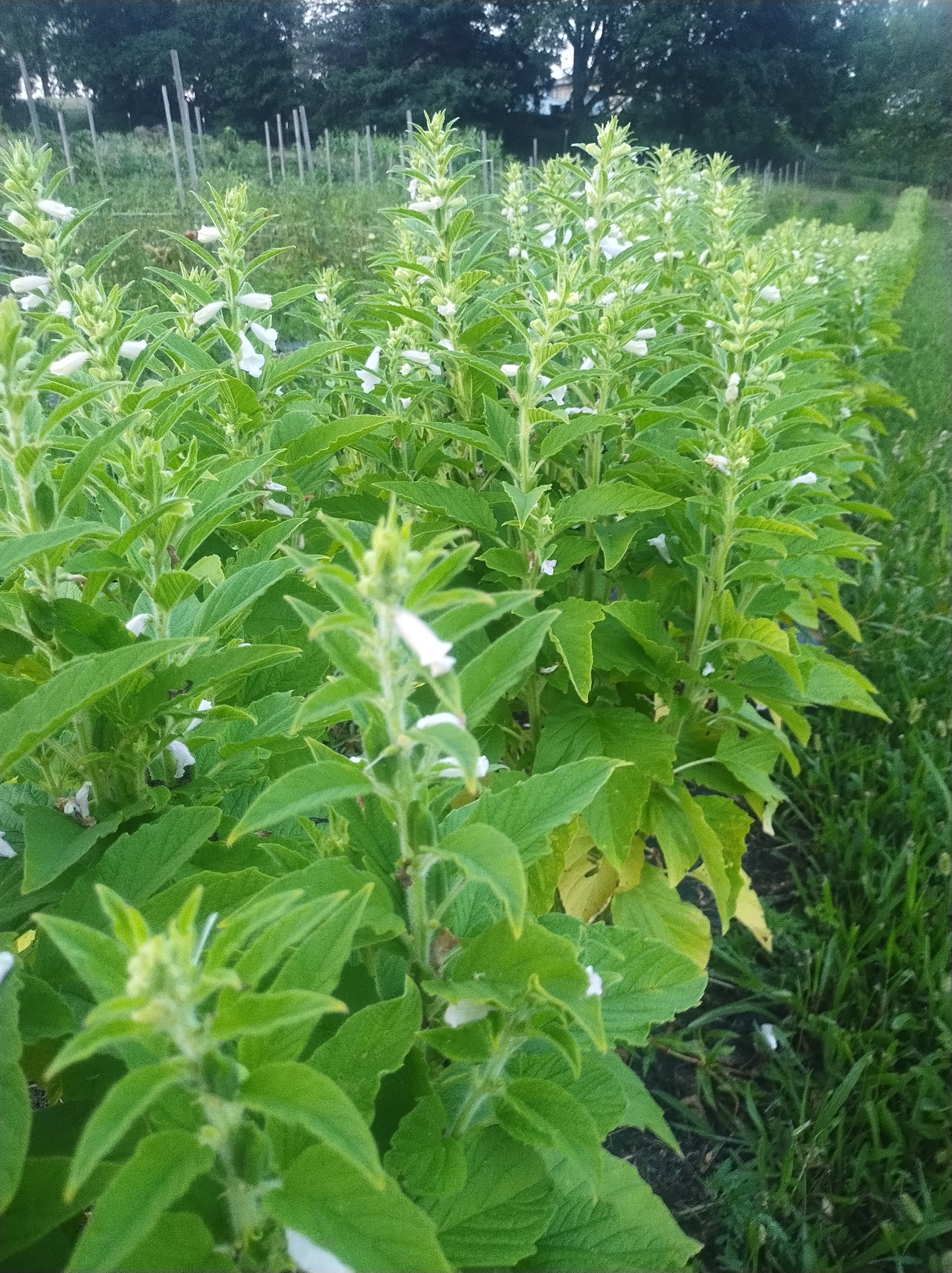
Sesame
We have been growing benne sesame since the beginning of our farm and love doing it. We start the sesame indoors with tomatoes and typically transplant after all the other May transplanting work is done at 1′ spacing. The sesame has been a passive crop for us, asking for no special care or maintenance. The plants tend to shut down flowering as the day light fades in the fall and usually begin drying out before a frost arrives. We cut the whole plants when they seem about 50% died back because otherwise the seed pods may start opening and falling out or getting damaged from the weather. Sesame doesn’t ripen all at once, instead working progressively as the flowering stalks lengthen. After finishing drying indoors it’s an easy shake onto a tarp to collect the seeds. The hardest part of the sesame harvest is having a place to dry the plants protected from rodents. The best deterant method I’ve found is to have a distraction crop. For instance, by this time the sorghum will have been harvested and some of the plentiful seedheads can be put in the barn a week or two before the sesame. This past year there was great success in doing this. We press the sesame for a very special oil and use it for baking and other recipes.
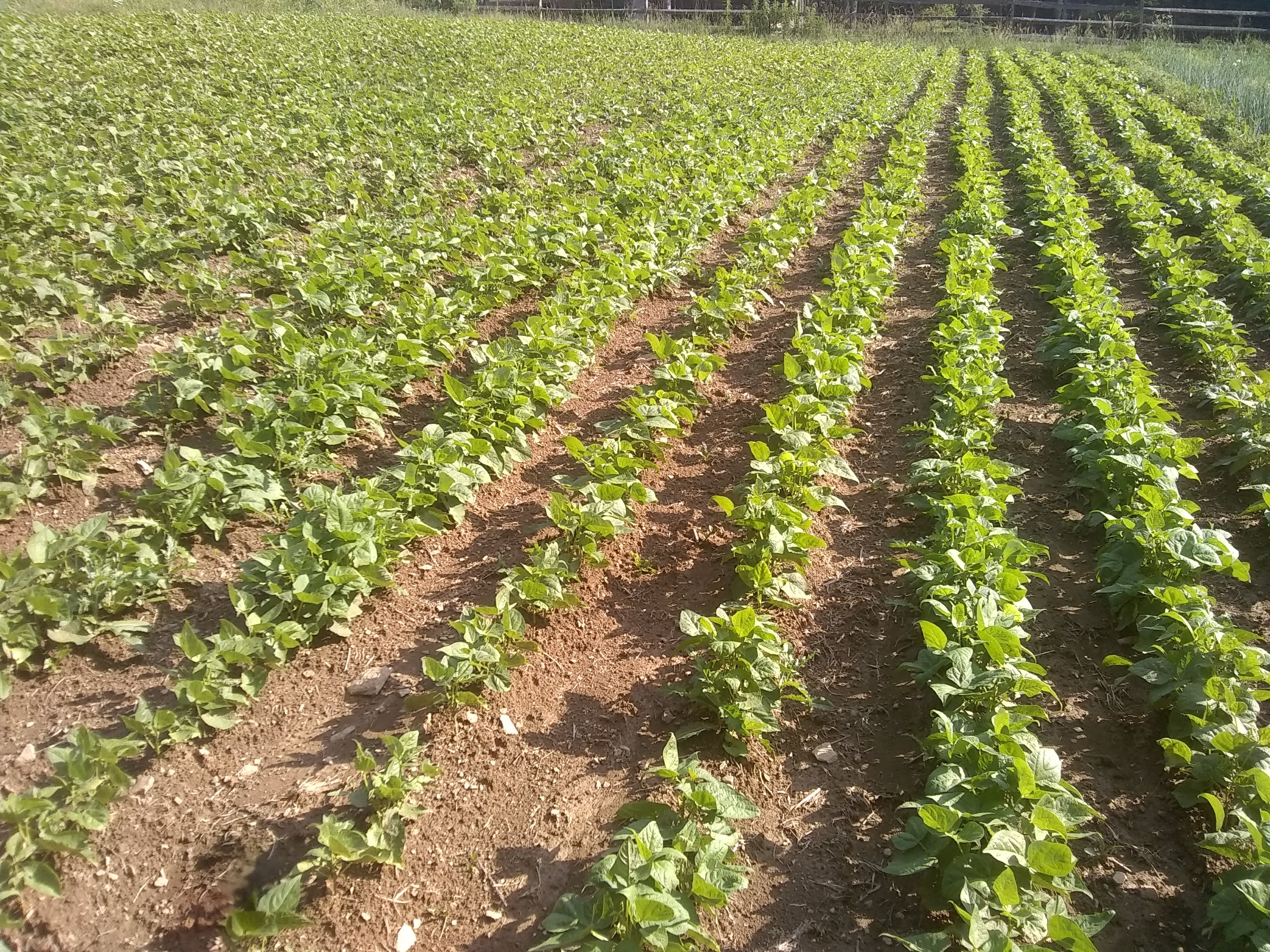
Beans
At one time we were growing well over a dozen different varieties of beans. Beans are really easy to get carried away with. But the logistics of storing and cleaning has dwidled that number down to 2 or 3 beans that we really liked. In fact, a few years back our two favorite beans crossed in the field and we’ve grown that cross out for a couple season to where it is mostly stabilized and now this is the primary bean that we grow. Its a bean that resembles a marfax bean but with the marking of a calypso, except the black is replaced with marfax’s beautiful sand brown. We also are still growing an appoloosa bean who tends to change colors and patterns at will every year, so who knows how much they still resemble their namesake’s appearance. Either way, the beans are one of our favorite winter food stores. And making a homegrown miso is very exciting.
The beans are directly sown after the frost date with about 6″ spacing between rows. It’s wide enough for a narrow cultivator tool to pass through. After usually 2 passes the beans would have filled in a canopy making it impossible to keep passing, but also shading out competing weeds. When the beans plants die back about 90% we’ll cut the whole plant out of the field, leaving the roots in place. The beans gets a chance to finish drying before getting threshed through simple stomping or crushing and after sorting the debris is respread onto the field. In a perfect year the bean crop will run from May until August, and then the plants are reincorperated into the soil right on time for winter wheat to be planted.
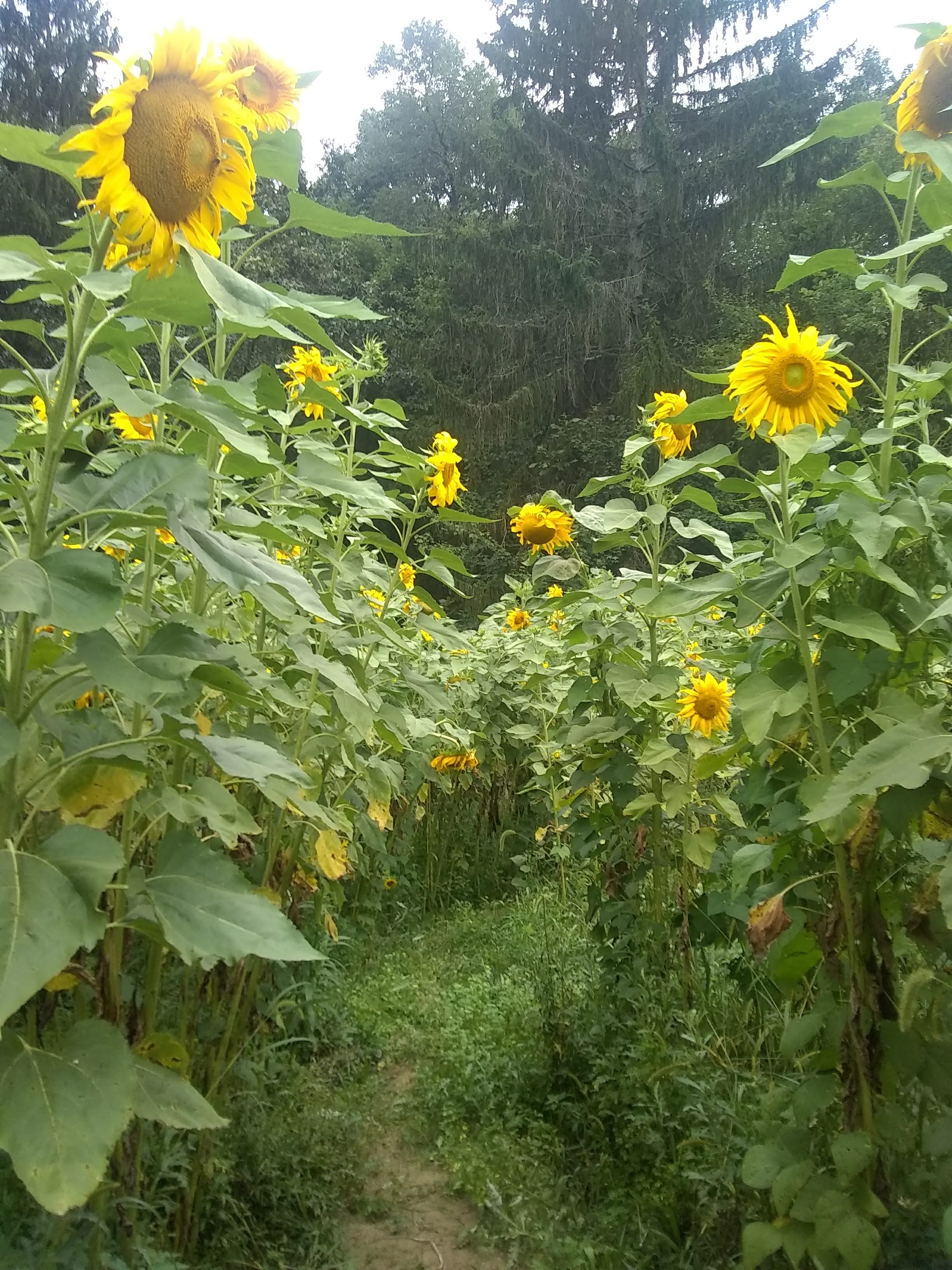
Sunflowers
Sunflower oil is our prefered oil seed crop for yield and ease of growth and processing the plant. We grow the peredovik variety because of its high oil content. The heads are cut off when they start to yellow on the back and are finished drying indoors. They are then threshed with a bicycle wheel and can be pressed without any additional cleaning or hulling. We don’t mess with sunflower seeds for eating because we haven’t put together a hulling device that made the work feel worth it. There’s always a lot to do. Generally sunflowers are planted when there’s time towards the end of the spring planting season when the soil is warmed up and are direct sown with an earthway seeder when rain is on the forecast for quick germination. They get about a foot of spacing between rows.
Pepitas
Every couple of years we grow another crop of pepitas. Their fatty seeds are really delicious and are our choice for fatty seeds for eating because there is such little processing or cleaning involved. The special cultivars for pepitas are grown in the same manner as winter squash and when the fruit are matured, the tops are cut off and the insides are scooped out. They seeds are then cleaned for the squash guts and gently dried. It’s a fun crop to make pumpkin butter in the same way as peanut butter.
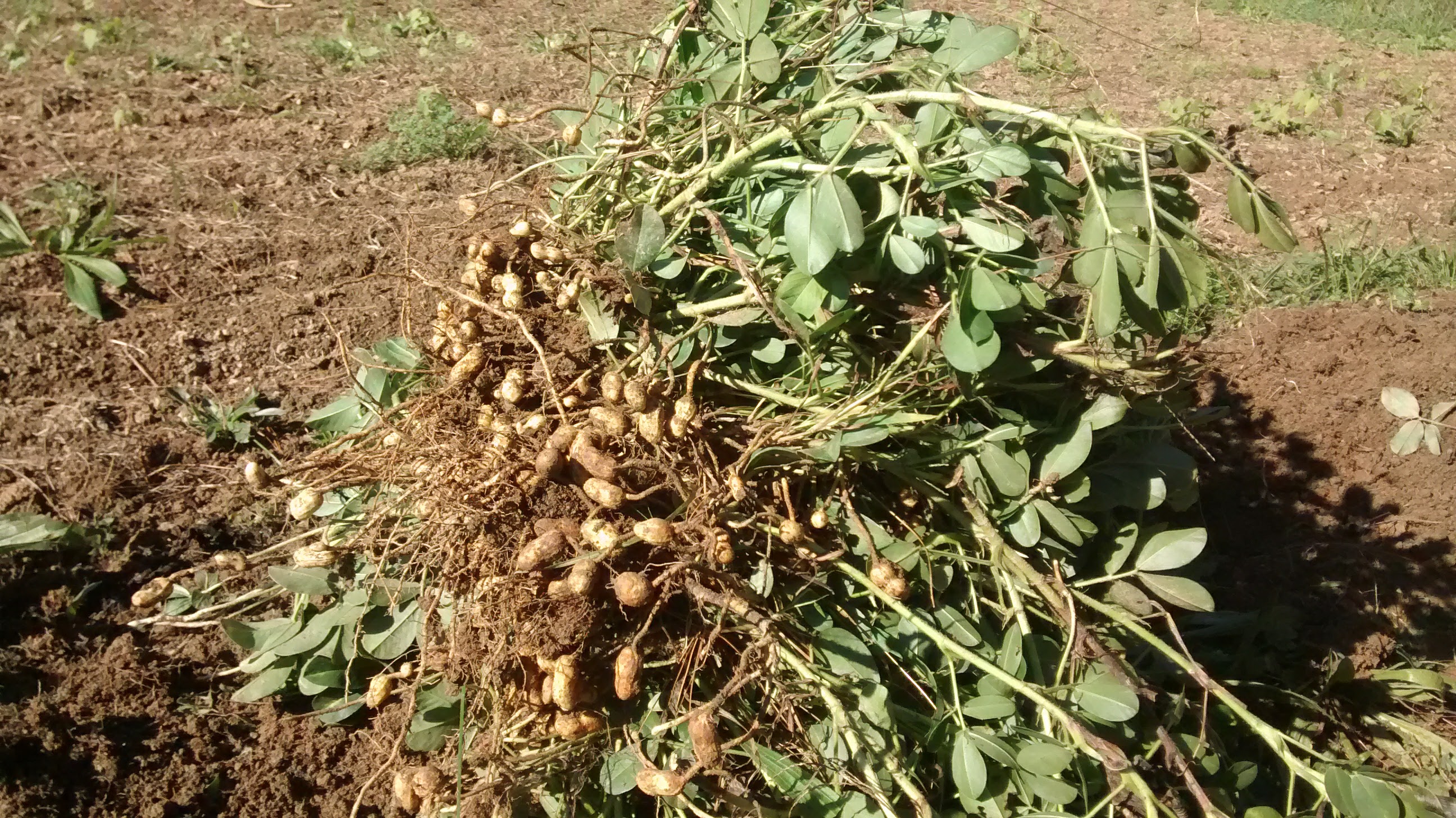
Peanuts
We’ve been growing the Carolina Runner peanut for probably a decade now and really enjoy it. There’s nothing like pulling up a plant for a harvest and seeing the nuts dangle beneath. We don’t do anything too special with the peanuts we grow except snack on them and save more seeds. The seeds are started at same time as sesame and are usually a decent size when they are transplanted into the field. Our peanut crops have been a favorite of the wildlife so the more mature of a plant we can transplant, the better chance they’ll still be there in the weeks to come. We’ve tried direct sowing peanuts and it’s as if we are just feeding the wildlife as none ever make it, rarely even to sprout.
 Pittsburgh County Fair