
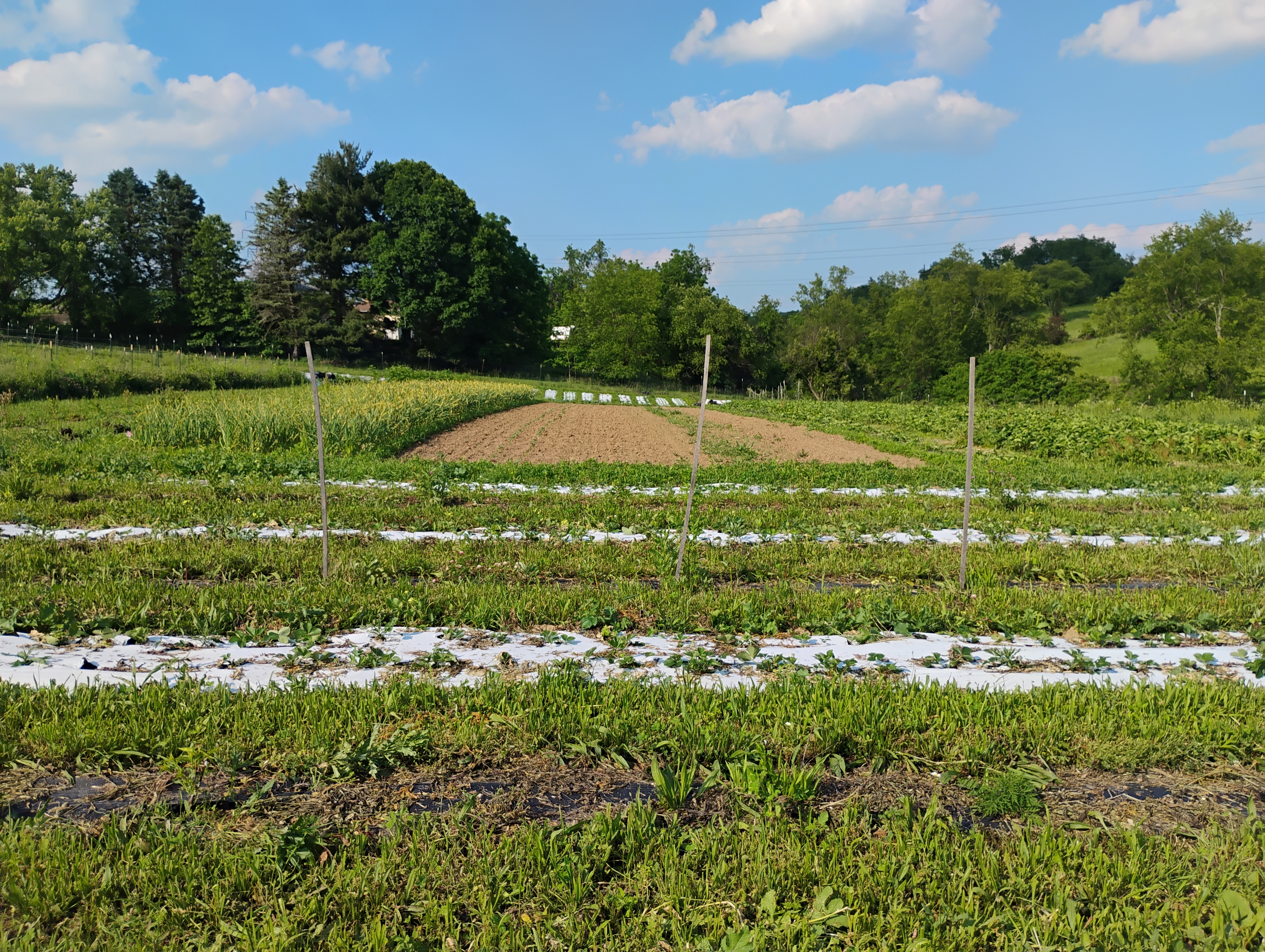
Welcome to our little online tour of the Ferment Pittsburgh farm situated 30 minutes outside of Pittsburgh. The space currently used is a bit over 2 acres. The initial project moved locations 4 years ago but has been chugging along since 2015.
Introduction
Long ago, when the plunge into fermentation and understanding its value to the ecosystem of human lives deepend, it grew more apparent that its place, not as a stand alone add-on, but as another practice that worked in relationship with other factors like season and location was an essential part of its practice. It made less and less sense to go to the grocery store and make saurkraut from cabbages grown across the country any time you wanted. That sort of thing keeps us disconnected from the seasonal flow of where we live and the task of preservation for the health of the world outside of humans too. The idea was to move fermenting away from being an ornament, and reweave its meaningful purpose back into our lives. This was one of the big reasons for starting the farm that has worked hand-in-hand with Ferment Pittsburgh. The farm has been a place to explore ideas of self-sufficiency, community, reconnecting human living back into nature, trial and experiment farming practices and crops, and more.

Farm Description
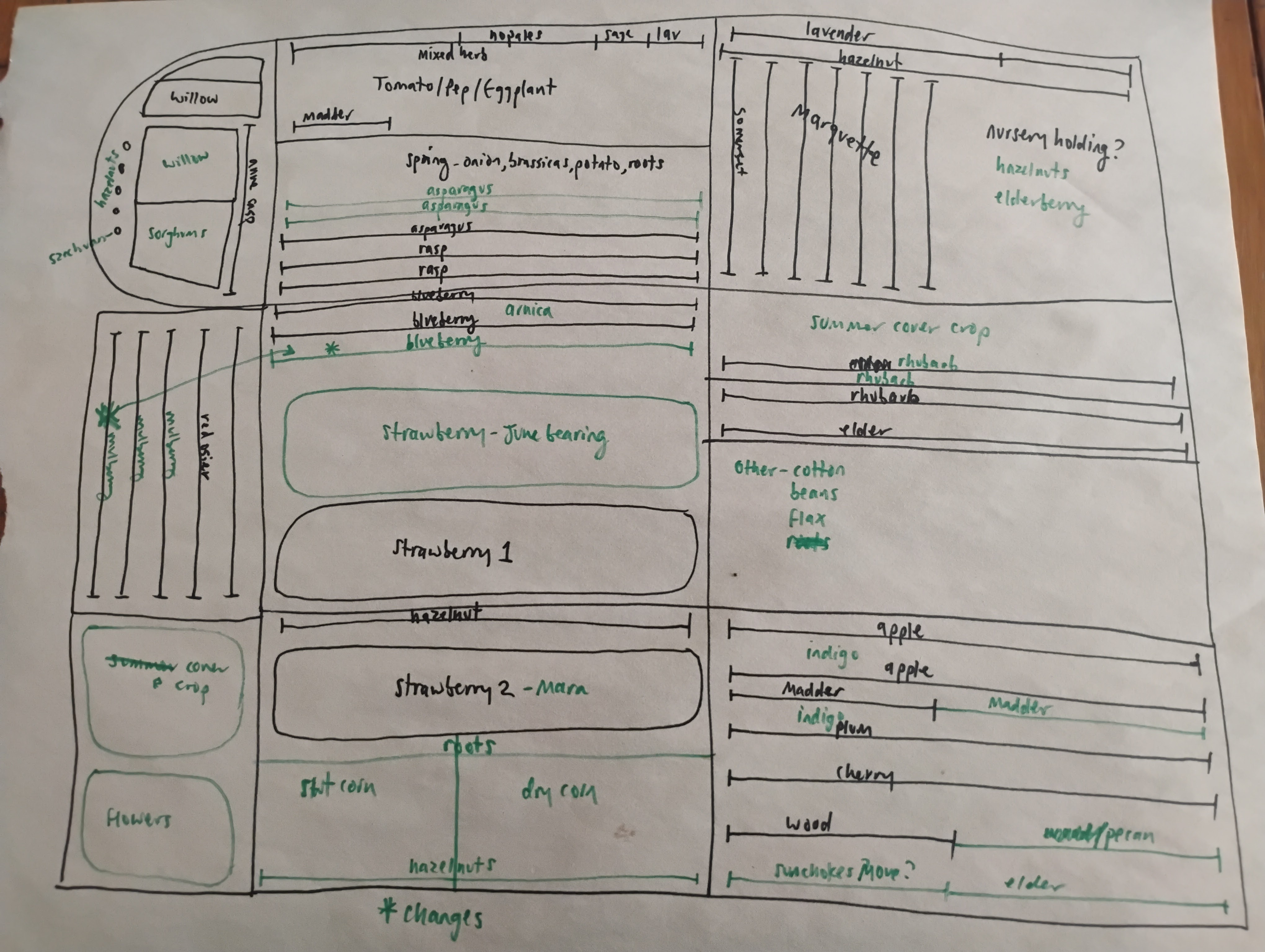
The farm is a mixed use plant farm that cultivates edible and non-edible plants, both annual and perennials with mostly hand tools and minimal intervention. There is no irrigation on the farm aside from nature’s will, and there are no structures like tunnels, greenhouse, and the like. The only concession material-wise comes from plastic mulching which makes a project like this possible with less labor, thus keeping the need to make money from the project at a minimum. Without plastic mulch the farm would require more time and paid labor, which would snowball into needing more production from the plants, and increased sales to the public. We would quickly lose our footing as a project for exploration, therapy, and community.
After initial soil correction through various minerals and fertilizers, the current regiment focuses on soil building through integrating plant matter, long crop rotations, and through soil biology by fostering microbial health, with adjustments to soil pH mainly through liming staying in place as needed. Building soil biology comes from cover cropping, making inoculations through soil drenches and foliars that emphasize native microbes, and minimizing production demands and being conscious of how much plant material leaves the field, complimented by a 4 year crop rotation cycle with one of those seasons as a full rest from production and tillage. Likewise, we leave patches of native flowers to remain in the farm area and have been fostering dedicated rows to these pollinators.
For the mixed goal of growing for food preservation and to sell to the public to support the project typically center around classic summer crops like tomatoes, peppers, eggplants, potatoes, onions, squash, garlic, greens, herbs, and soforth. Sweet corn took hold in the line up later on after seeing the impact it made on bringing more people to the weekly Farm Stand, and remains has been the only hybrid grown on the farm, which after some iffy trials with OP corn, we’re transitioning to Lofthouse corn. It is common practice to prioritize more space to these crops for larger plantings in order to not feel required to make heavy production demands while still getting enough. A part of the growing philosophy is to leave a percentage of the crop unharvested to assist in countering the loss in nutrients from what gets pulled out of the field. We attempt to approach the fields with a thoughtful and gentle mindset so the health of the area is always considered in relationship rather than by solely human will. We initially did light schedules of organic permitted pest products but have wained that back to very little spraying, if at all. Insect exclusion fabric coverings have taken the place most spraying, and if any crop is getting hit too hard we’ll make adjustments like when the crop gets grow, or if it’s grown at all. For example, we grow brassicas in the spring until the harleqiun bugs move in towards August, and then those crops are done. Though we’ve been able to get away with late summer plantings of cabbage on opposite ends of the field.

Given the varied conditions of how seeds brought into the farm could be grown, we prioritize saving seeds of all of the crops in order to adapt them to the growing practices and expression of place that is now their home. Often times it becomes a complex conversation of give and take when deciding what needs to go to market and what needs to stay and produce seeds. What has helped the most is to stagger the crops by attempting to save larger quantities of seeds to last a year years and cycle through a handful of crops at a time to save seeds from each year. Admittedly, it’s been challenging to learn after being raised in farming for sales, but we’ve been steadily embracing unrestricted cross pollination for many crops and we ocassionally bring in new varieties to give different crops certain nudges of diversity. Overall we are saving close to 90% of seeds for what is grown on the farm.
Plant Profiles
Below are pages with brief plant profiles for the main crops we grow. Perhaps the information could be useful to you or even inspire what plants you think you can successfully grow in our region. Thanks for taking a look.
- Annual Vegetables (almost done writing)
- Perennial Vegetables
- Non-edible Perennial Crops
- Perennial Fruits, Nuts, Berries
- Grains
- Annual Seed Crops (that aren’t grains)
 Pittsburgh County Fair