

Quinoa
Quinoa first started as a small scale experiment in a pot to learn how the plant worked. We decided to give it a try because that was the primary grain eaten in the household. This eventually led to experiments with direct sowing in late May which has gone remarkably well, with easy care and great yields. The biggest issue has been lodging due to the incredible grainhead size. They also thresh very easily. One of the biggest challenges from direct seeding is that quinoa looks exactly like lambs quarters until the flowers show.
Rice
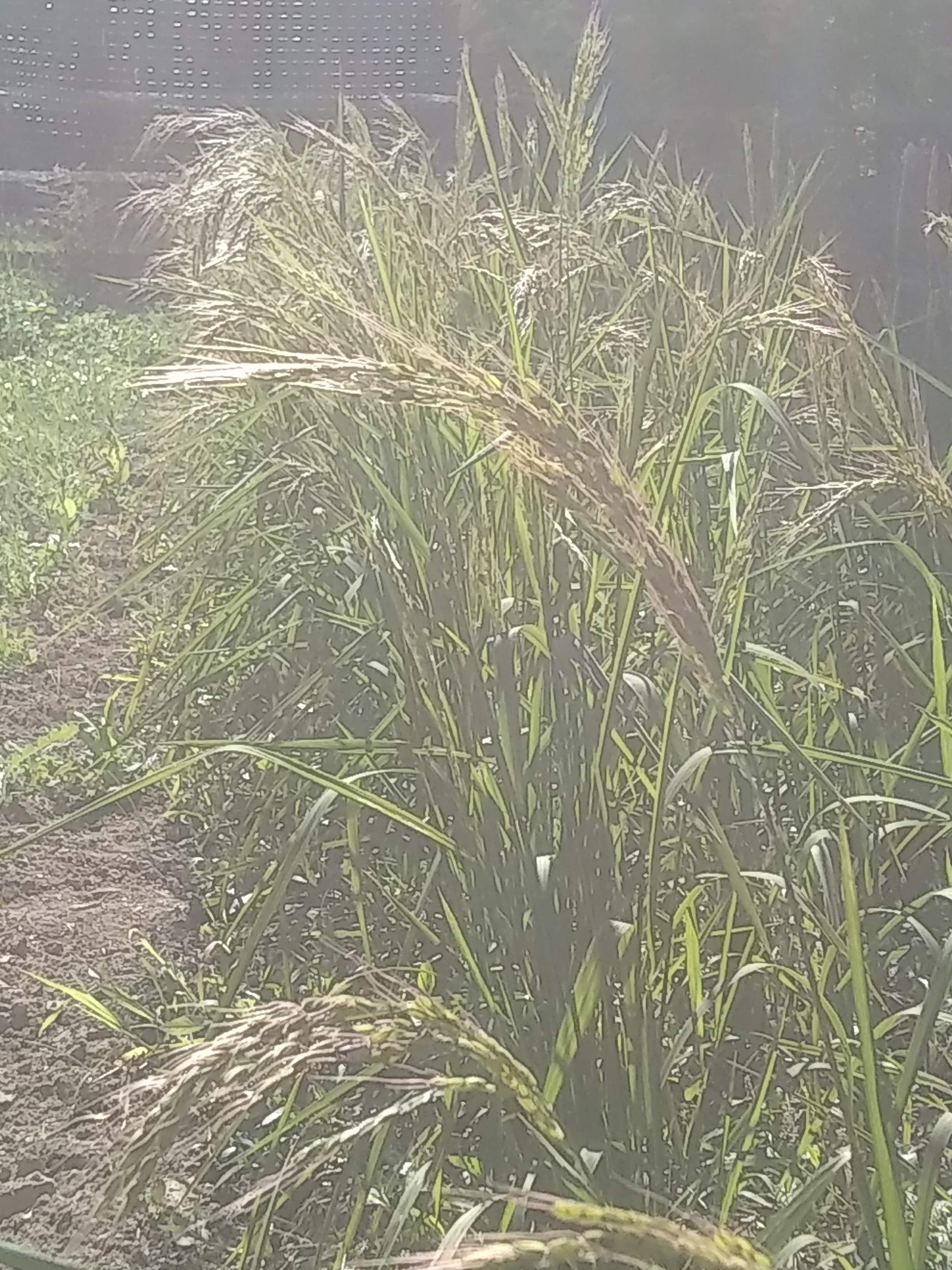
We grow Duborskian Rice which is a dryland rice, so no flooding necessary. The seeds are usually started indoors later in the spring starts schedule and then planted out once they reach three leaflets to tight in row spacing with 6″ between rows. It usually takes maybe two weeks. We’ve had hit or miss success with direct sowing, not completely sure why, but maybe the seeds are being eaten. After growing and beginning to die back, the grains are harvested, put somewhere to finish drying, and handthreshed. This rice has a hull which is difficult to remove. The best way we’ve found is to just run it through a grain mill at a large setting. It cracks some grains but gets the hulls off with the least about of trouble.

Corn
We grow Abenaki corn for grain to be used for hominy, grits, and the like. The corn requires a noticable amount of nutrition to have healthy plants, which takes proper soil preperations and feeding two more times during growth. The plants are left to grow and die back on their own and the mostly dried ears are collected and hung to further dry and then later threshed with a little hand ring device and stored.
Wheat
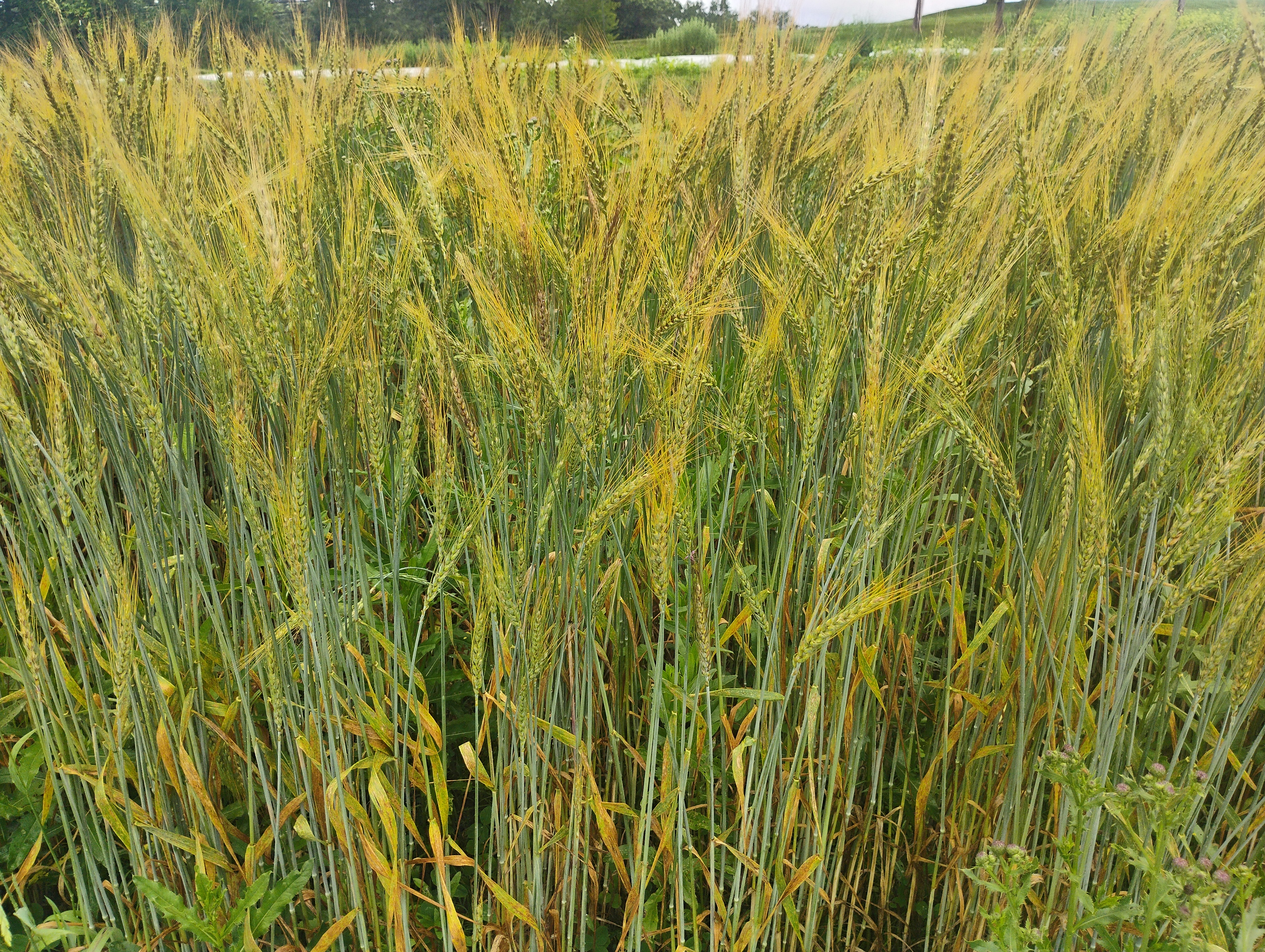
We have done a lot of growing with different wheats and their relatives at a small scale. At one time we were growing close to 20 different kinds but have paired that down for sanity’s sake. The primary wheat we grow is halychanka, which is faculative, so can be grown as a winter or spring grain. We also continue with a free threshing einkorn called Bleu Adur. Wheats that will get back into the rotation ever couple of year include- Black Emmer, Macha (very high protein wheat), and Cevena (purple wheat). Typically we do winter plantings because spring weather makes for too many added stresses. The harvest reliably falls around July 4th, where the heads are cut off and collected and the straw is mowed and left in place. The heads are dried to be threshed later when there is more time. Typically with large amounts the threshing is done with a leaf shredder, and then winnowed, and stored.
 Pittsburgh County Fair