
Updated: 1/15/26
A lot of the fruit we grow, aside from the beautiful array of things that can be made from them- vinegar, wine, dried fruit, frozen fruit, jams, etc… was largely prompted by our farm’s market stand. We learned that a casual roadside stand operation does best with “easy” fruits and vegetables, as in, things that are recognizable and people know what to do with them. Investment into fruits and berries has kept this farm’s finances bouyant, and in turn, has made the larder a lot more dynamic.
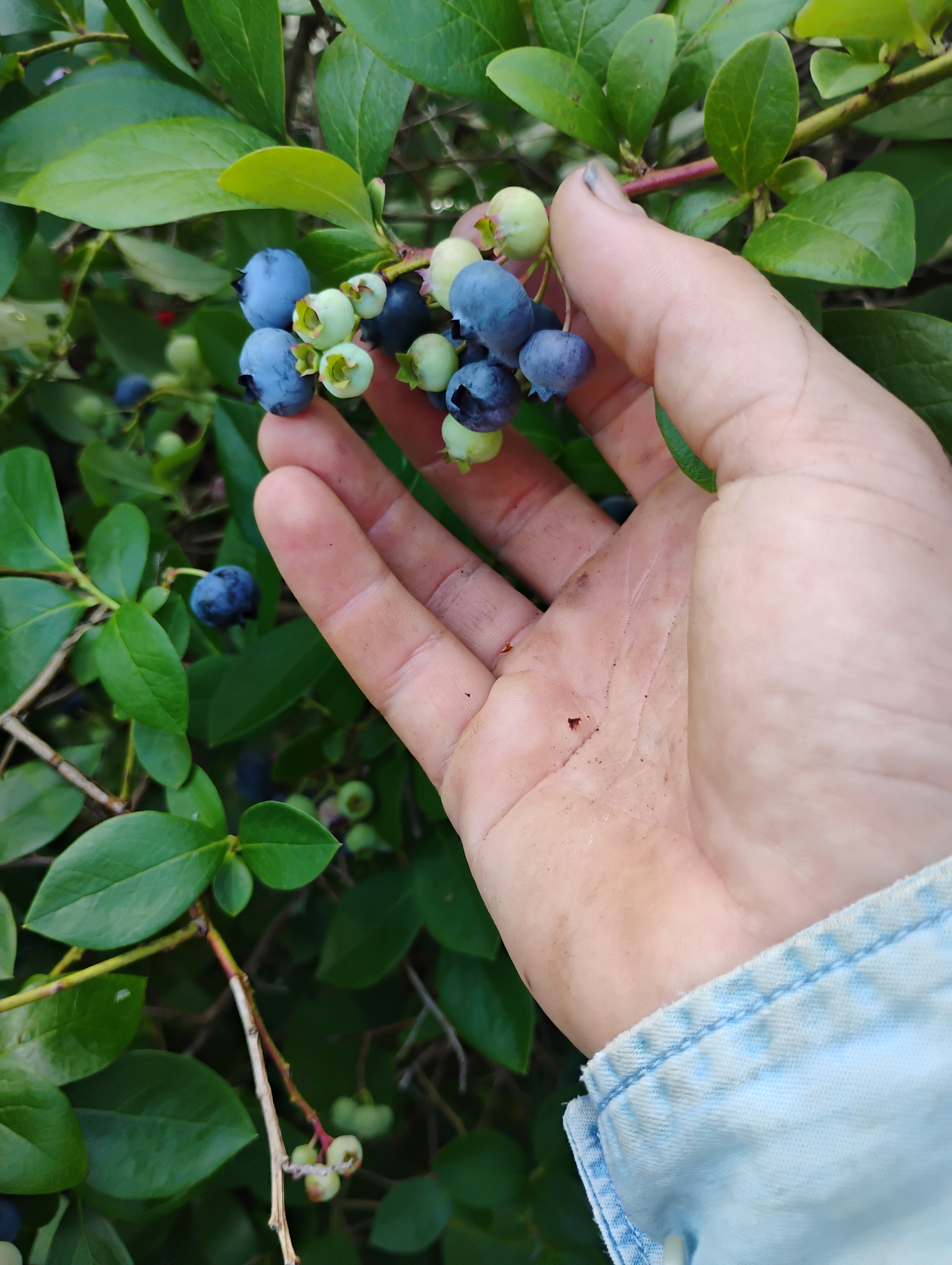
Blueberries
We grow two varieties to ensure better pollination- Jersey and Bluecrop. For the first couple of years we gradually lower the soil pH towards the ideal 4.5 and add organic matter as we can because its said that blueberries can tolerate improper pH with enough organic matter. Our blueberries come around early July and we are working on getting a crop of Elliot blueberries to help us string together the late season lull that markets experience in late September.
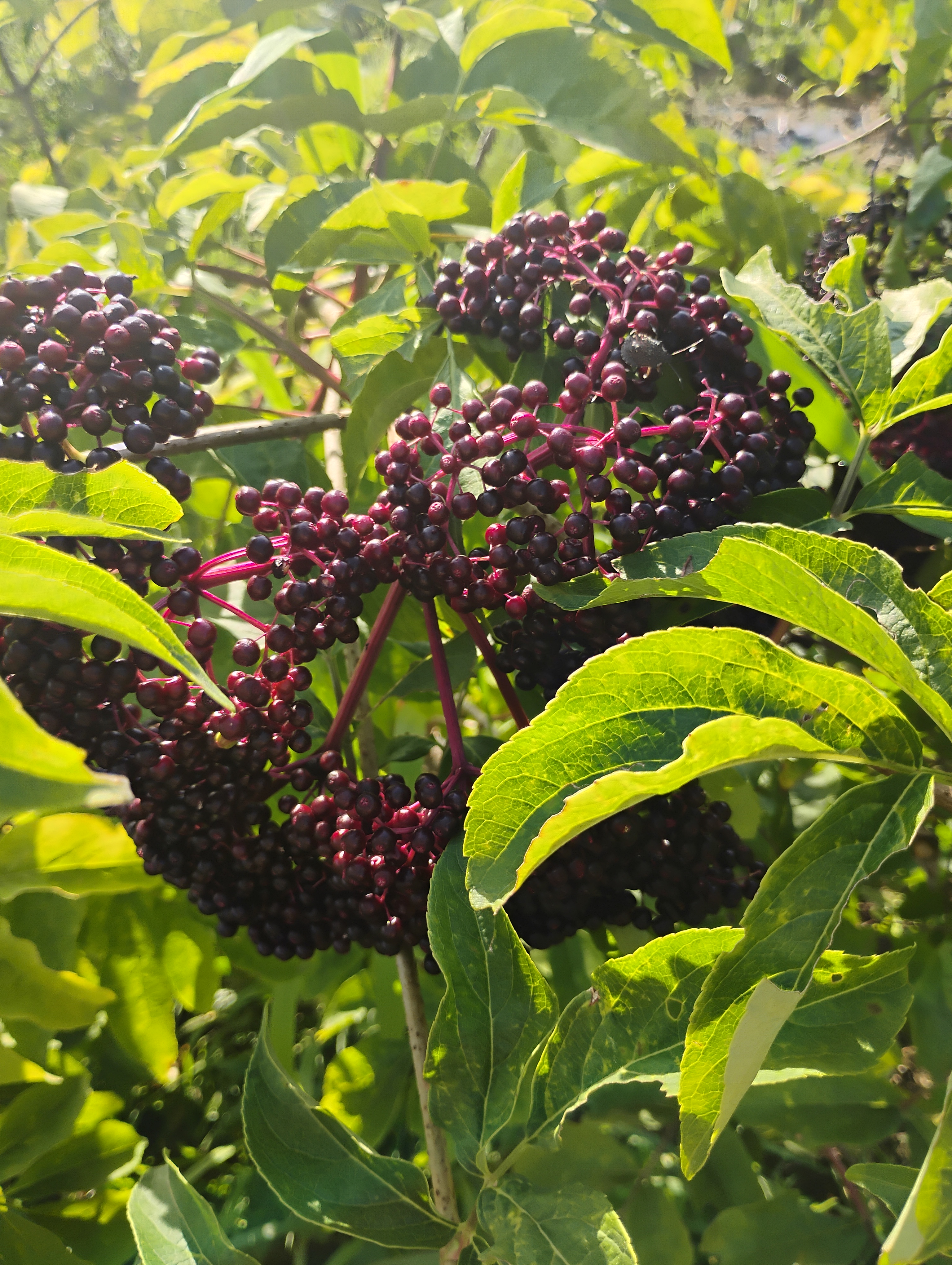
Elderberries
We have 220 feet of elderberries specifically for fruit for wine and jelly. We harvest our flowers from elders out in the “wild” because we can have more say over protecting the berries from birds in our field. The fields were started from stakes directly put into rows. Each year the elders are fully coppiced to a stump a few inches high. This helps us control the space the elders take up and multiplies the branches of new growth. It does make it so our elders come into season a tad behind, say, the untouched one down the street. The pruned off wood gets either propogated or in some cases saved for flutes or whistles.
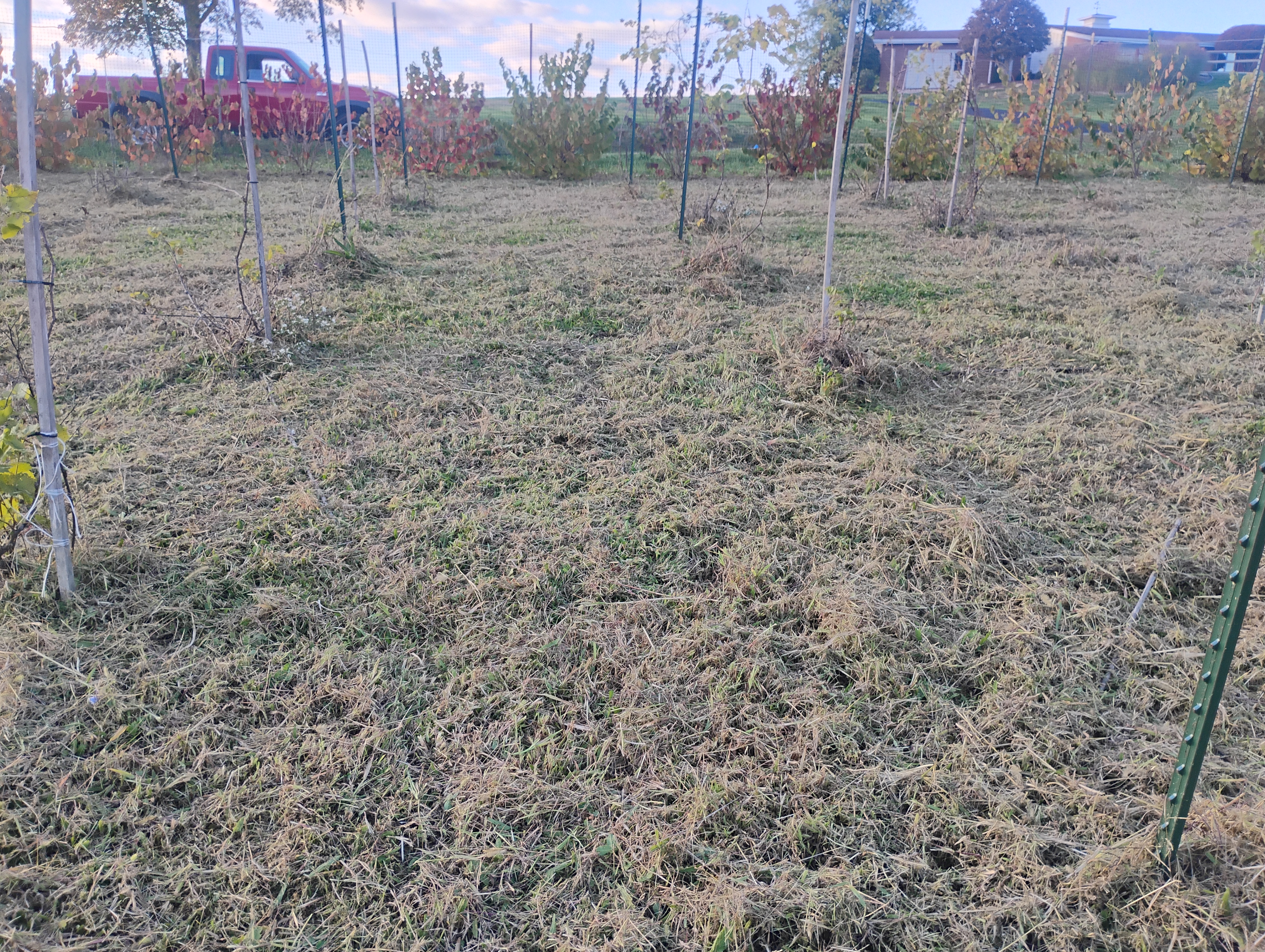
Grapes
We have 1/8 acre section dedicated as a vineyard. There are two rows of 8 plants of Somerset Seedless, a blush eating grape, and 7 rows of Marquette, a hold hardy University of Minnesota red wine grape. We also had 7 rows of Saperavi grape, a deep red Georgian wine grape, and during the winter of 2024-5 all of those grapes were killed off by that year’s harsh winter. We are currently gradually working the marquette to replace the space through rooted cuttings since we know they can handle the weather well.
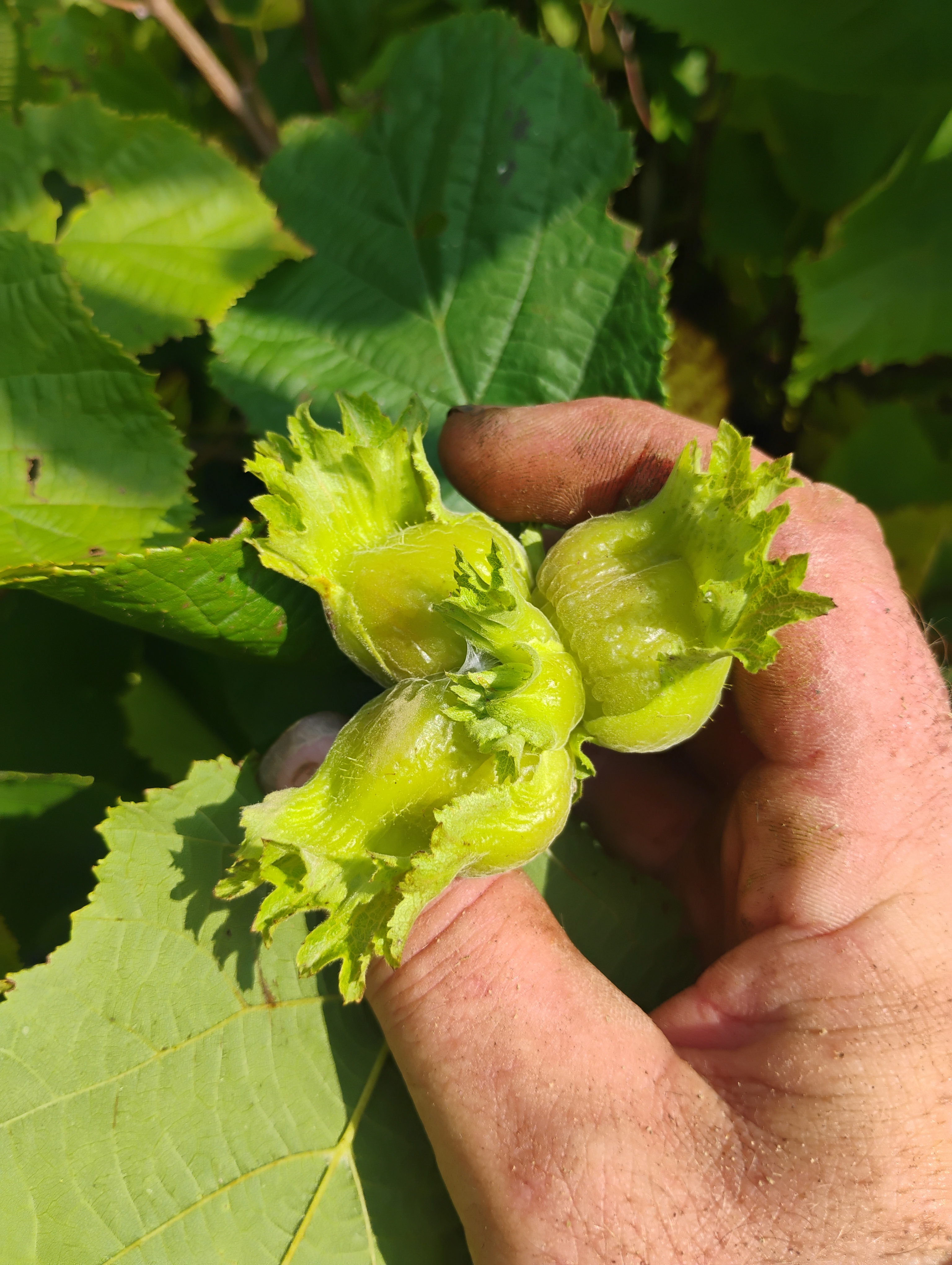
Hazelnuts
Initially as a wind break for the top of the vineyard field, we have a row of 22 American Hazelnuts. In the following years we added another full row and a partial row of productive cultivars with larger seeds. Hazelnuts have become a fixture in our nursery system with hundreds of seeds being started each year and several new rows being planted to frame the annual fields. We also have selected specific plants that we do stool cloning with. While we still haven’t had enough of a yield just yet to share with others, we are excited about this investment into the future to provide hazelnuts to our local market. We also have been experimenting with truffle inoculations with our saplings.
Apples
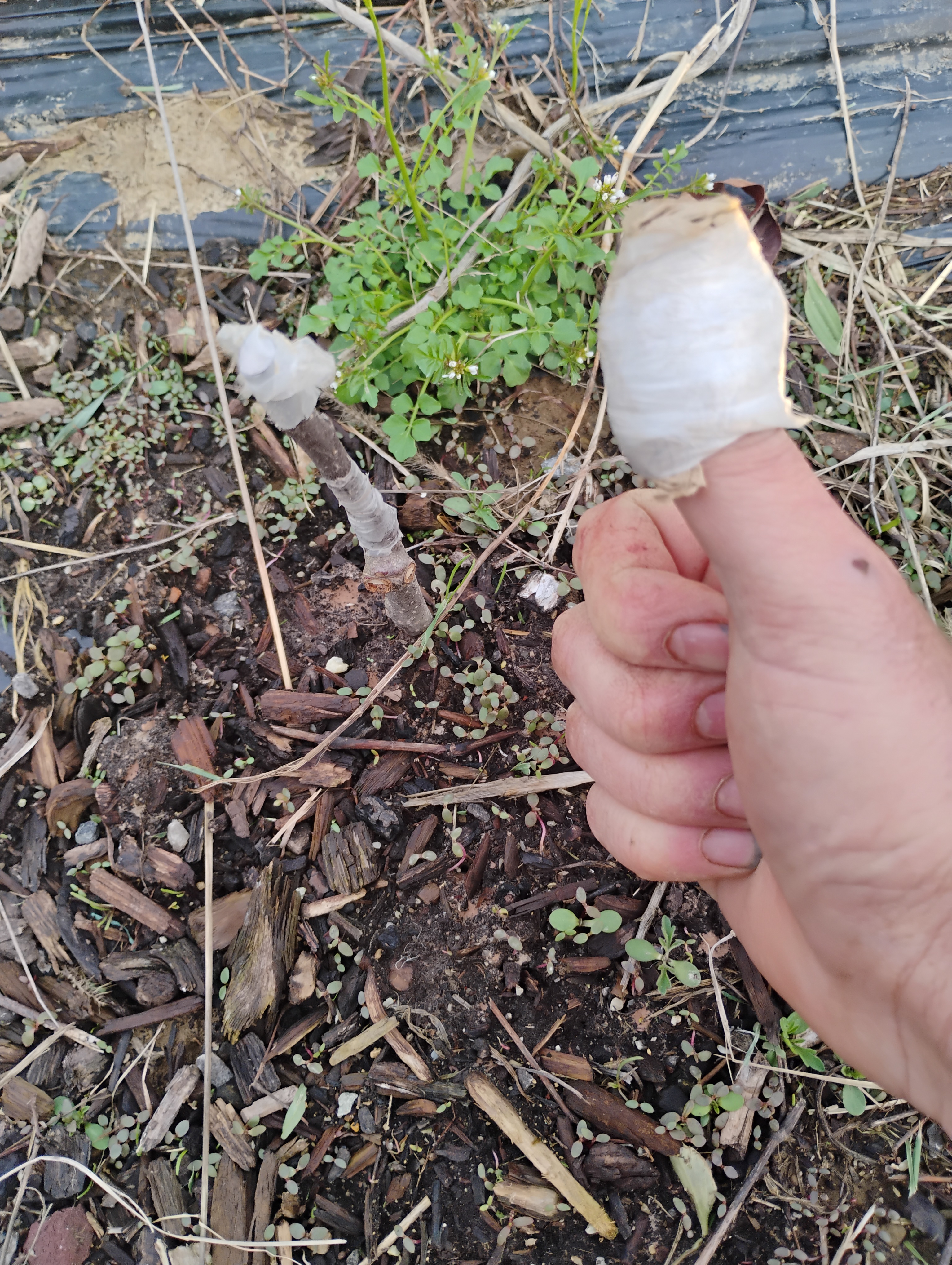
We grow a wide variety of apples in the tall spindle system. The trees are only dwarf root stock and are spaced 3′ apart on a trellis. Currently we have about 100 apple trees with varieties ranging from summer eating, to winter storage, and cidermaking. All of the apples were field grafted, something that I’m guessing isn’t recommended but truthfully we tend to have 95% success every year with a few that get knocked off by wind or something else. We’ve done a new row every year for three years so are still waiting on our first fruit perhaps in 2026.
Plum
We have 30 American Plum trees that came by default from failed peach grafting on the American root stock. Instead of fussing with it after a 100% failure we just went with letting the American Plums grow.
Strawberries
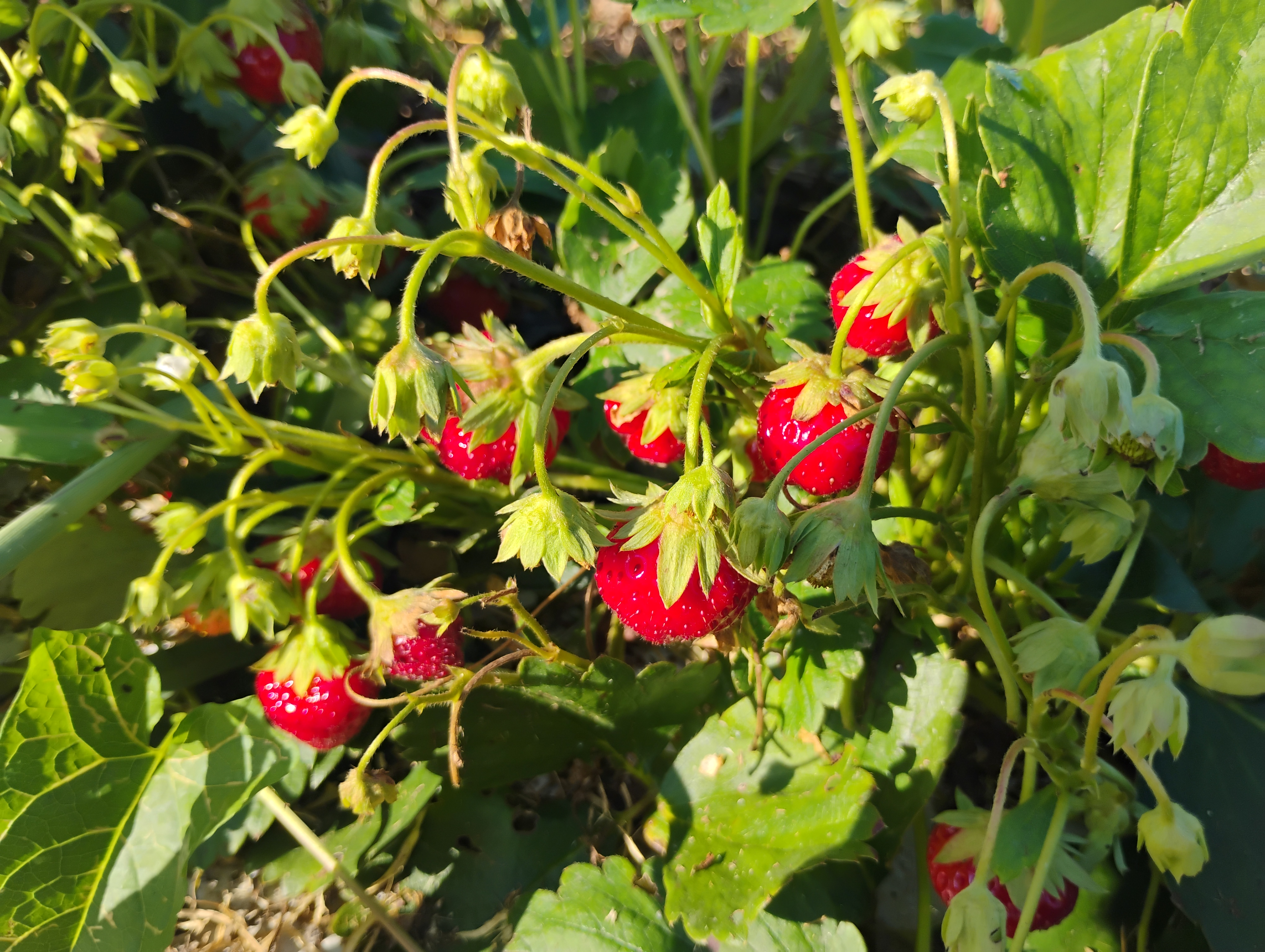
Two types of strawberries are grown, about 450 plants of June Bearing and about 400 Everbearing. The June bearing Honoeye have been a great way to generate some early sales through an exclusively strawberry farm stand in early June, and then other parts of the bulk harvest are easily turned into wine, jam, and vinegar. The Mara De Bois everbearing strawberries have been an excellent compliment to the farm stand’s late summer line up, especially because of their extrordinary flavor.
Pecan
Diving into an experiement we don’t know how it’ll work out, we are playing with a planting of northern pecan trees that we are hoping to restrain into a row crop system through very heavy pruning. We are not sure how this will work out and will take a few years to begin to understand what we’ve really gotten ourselves into. The idea is that we don’t have the space to plant a full sized shady tree in our fields, so we are going to try dwarfing pruning methods to attempt to get a crop from pecan trees planted in a row with 10′ spacing between the rows.
Persimmons
Sweet Cherries
 Pittsburgh County Fair